
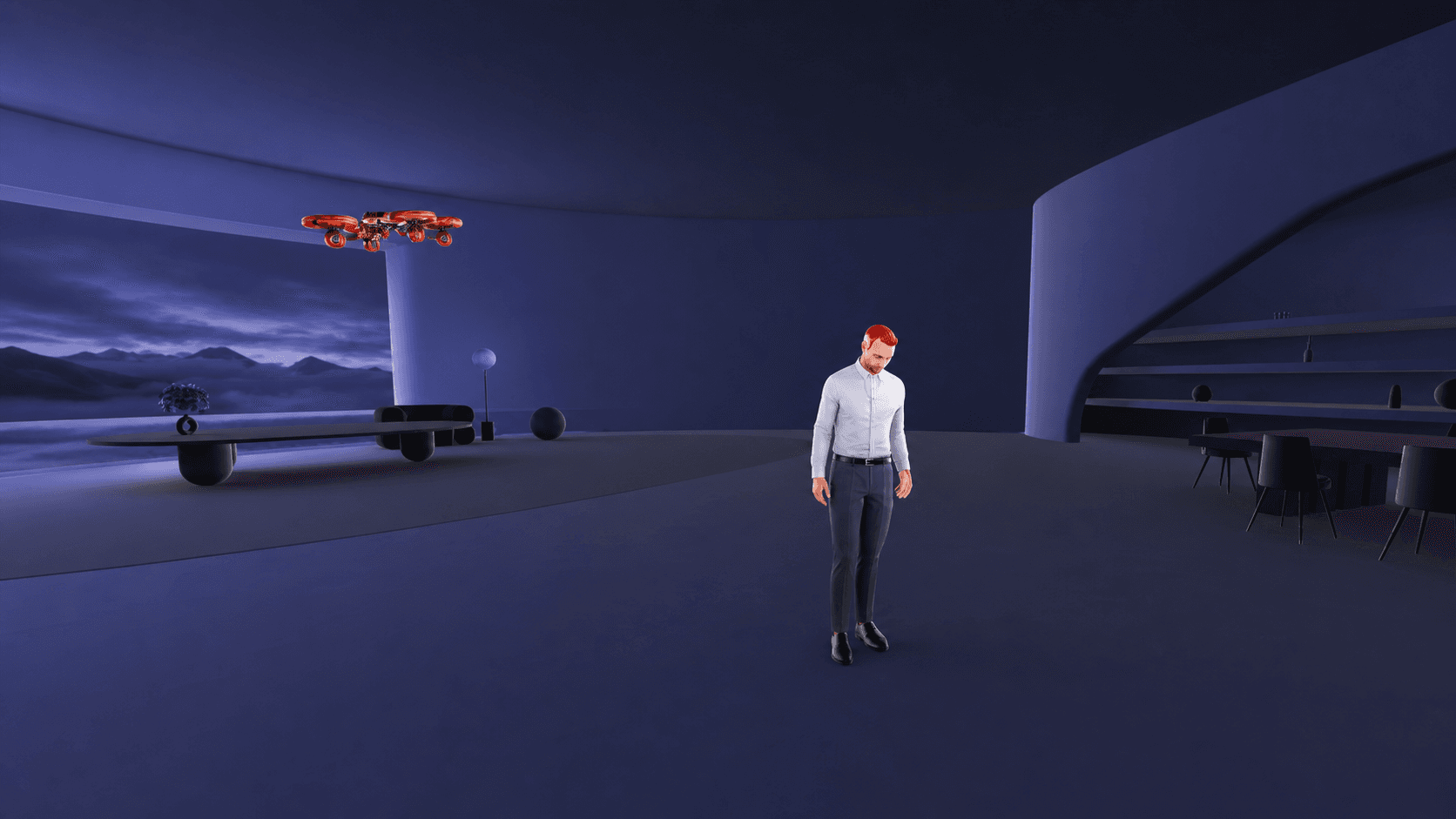
Presence changes how people participate
Text is efficient, but some moments benefit from a face, voice, timing, and expression. A live character can make guidance more approachable, create continuity across a journey, and help a brand feel present rather than merely available.
The character should never distract from the task. Its purpose is to make the interaction clearer, more human, and easier to continue.
A character needs an employee behind it
Visual realism alone does not create a useful experience. The character needs a role, approved business knowledge, a voice, channel context, tools, memory rules, and a path to human support.
When those systems are connected, the same employee can move between a website, voice call, embedded experience, or service workflow while preserving its identity and boundaries.
Design for the moment
Use a live character where presence improves understanding or trust: guided sales discovery, onboarding, learning, hospitality, product assistance, or high-context service.
Measure task completion, handoff quality, response time, and customer confidence rather than optimizing only for visual novelty.